

Do You Know DTH Drilling Rig?
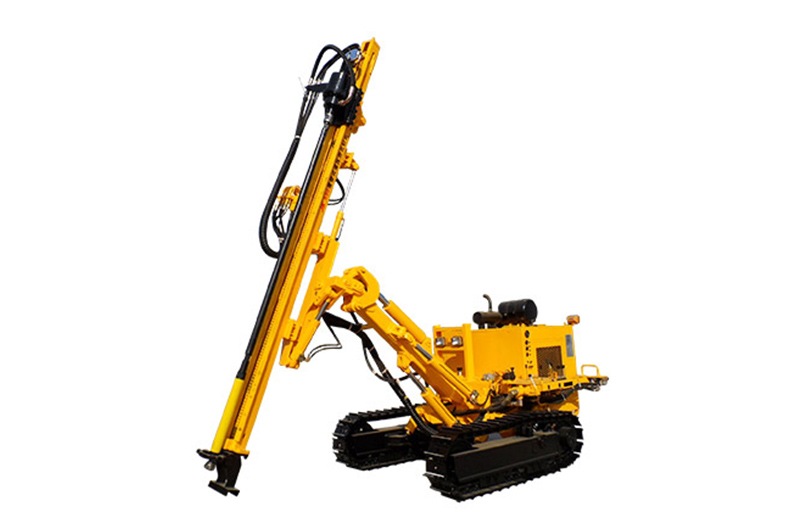
Definition
In mining, quarrying, water well drilling, and construction projects, drilling through hard rock formations requires equipment with high penetration efficiency, excellent hole accuracy, and reliable performance.
A DTH (Down-The-Hole) drilling rig is one of the most widely used drilling solutions for hard rock applications. Unlike conventional drilling methods, DTH technology places the hammer directly behind the drill bit, allowing impact energy to be transferred directly to the rock surface.
This design makes DTH drilling rigs suitable for challenging geological conditions such as granite, basalt, limestone, and other hard formations. They are commonly used for blast hole drilling, water well drilling, geothermal drilling, foundation construction, and quarry operations.
What Is a DTH Drilling Rig?
DTH stands for Down-The-Hole. A DTH drilling rig is a type of rotary percussion drilling equipment that uses a pneumatic hammer installed at the bottom of the borehole.
The main difference between DTH drilling and traditional top hammer drilling is the location of the impact mechanism.
| Drilling Method | Hammer Position | Energy Transmission | Suitable Applications |
|---|---|---|---|
| DTH Drilling | Inside the borehole, near the drill bit | Direct impact energy transfer | Hard rock, deep drilling |
| Top Hammer Drilling | On the surface | Energy transmitted through drill rods | Shallow rock drilling |
| Rotary Drilling | Surface rotary system | Cutting and crushing by rotation | Soft to medium formations |
Because the hammer works directly at the bottom of the hole, DTH drilling minimizes energy loss and maintains stable drilling performance even at greater depths.
How Does a DTH Drilling Rig Work?
A DTH drilling rig combines rotation, impact, and air flushing to break and remove rock.
The working process includes:
1. Compressed Air Supply
A high-pressure air compressor sends compressed air through the drill pipe to the DTH hammer.
2. Hammer Impact
The compressed air drives the piston inside the hammer, causing repeated impacts on the drill bit.
The drill bit transfers impact force directly to the rock surface, crushing hard rock formations.
3. Rotary Drilling
At the same time, the rotary head rotates the drill string, allowing the drill bit to continuously contact fresh rock areas.
4. Cutting Removal
The exhausted air flows through the drill bit and carries broken rock particles out of the borehole, keeping the hole clean and improving drilling efficiency.
Main Components of a DTH Drilling Rig
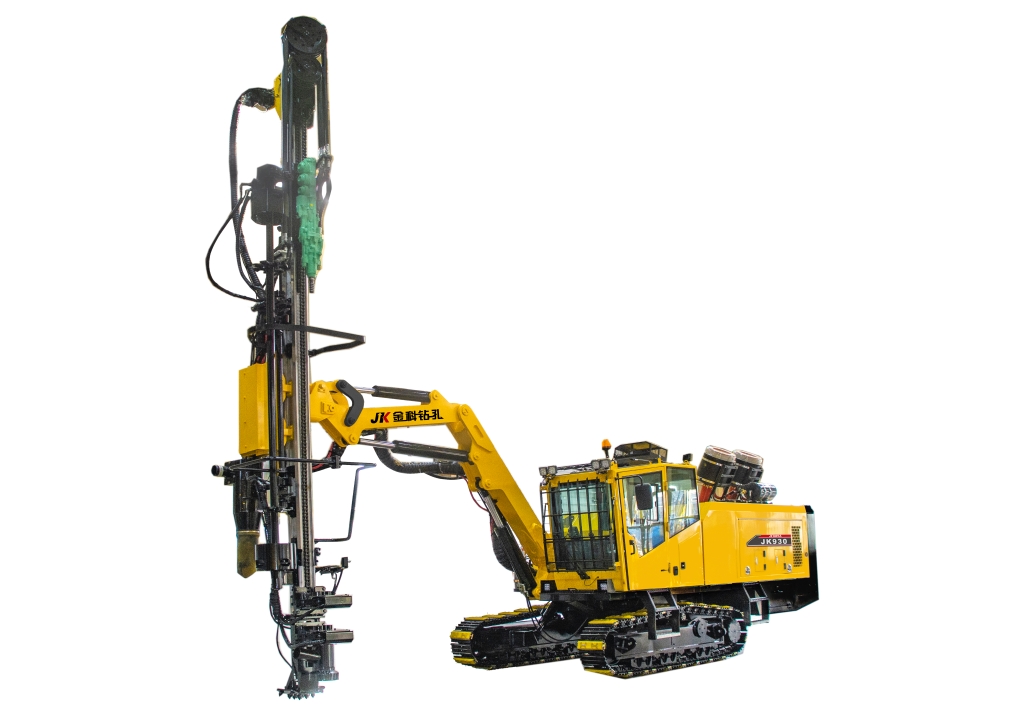
A complete DTH drilling system usually consists of the following components:
| Component | Function |
|---|---|
| Drill Mast | Supports drill pipe movement and positioning |
| Hydraulic System | Provides power for drilling operations |
| Rotary Head | Rotates drill rods and drill bits |
| DTH Hammer | Generates impact force at the bottom of the hole |
| Drill Bit | Directly breaks rock formations |
| Air Compressor | Supplies compressed air for hammer operation and flushing |
| Crawler Chassis | Provides mobility on rough terrain |
Each component affects drilling speed, stability, maintenance requirements, and overall operating cost.
Applications of DTH Drilling Rigs
Due to their excellent performance in hard rock conditions, DTH drilling rigs are widely used in multiple industries.
1. Mining and Quarrying
DTH rigs are commonly used for:
Blast hole drilling
Open-pit mining
Quarry drilling
Rock fragmentation projects
For mining operations, accurate hole positioning and stable drilling depth help improve blasting efficiency and reduce unnecessary drilling costs.
2. Water Well Drilling
DTH drilling rigs are widely applied in groundwater exploration and well construction, especially in hard rock areas.
Typical applications include:
Agricultural water wells
Industrial water wells
Deep groundwater exploration
3. Geothermal Drilling
DTH technology is suitable for geothermal projects requiring deep and accurate boreholes.
Applications include:
Geothermal energy wells
Heat pump drilling
Underground energy projects
4. Construction and Foundation Engineering
DTH drilling equipment can also be used for:
Foundation drilling
Anchor holes
Slope stabilization
Infrastructure projects
Advantages of DTH Drilling Technology
High Efficiency in Hard Rock
The direct impact mechanism allows DTH rigs to maintain strong drilling performance in hard and abrasive rock formations.
Better Hole Accuracy
Since the hammer is positioned close to the drill bit, DTH drilling provides better hole straightness compared with some traditional drilling methods.
Suitable for Deep Drilling
Impact energy loss is reduced because the hammer operates at the bottom of the hole.
Lower Drill Rod Stress
The drilling system reduces energy transmission through long drill strings, helping extend equipment service life.
Wide Application Range
DTH drilling rigs can be customized for mining, water wells, construction, and geological projects.
Different Types of DTH Drilling Rigs
According to different working environments, DTH drilling rigs can be divided into several types:
| Type | Features | Applications |
|---|---|---|
| Crawler Mounted DTH Rig | Strong mobility and stability | Mining, quarry, rough terrain |
| Truck Mounted DTH Rig | Easy transportation | Water wells and field projects |
| Hydraulic DTH Rig | High power and efficiency | Heavy-duty drilling |
| Portable DTH Rig | Compact structure | Small-scale drilling projects |

How to Choose the Right DTH Drilling Rig?
Selecting the correct drilling rig depends on several project requirements.
| Selection Factor | Consideration |
|---|---|
| Rock Formation | Hardness, abrasiveness, geological conditions |
| Drilling Diameter | Required borehole size |
| Drilling Depth | Maximum required depth |
| Working Environment | Mine site, quarry, construction area |
| Mobility Requirement | Crawler or truck-mounted structure |
| Compressor Capacity | Required air pressure and volume |
Before purchasing a DTH drilling rig, users should evaluate geological conditions, drilling requirements, and long-term operating costs.
JK Drilling DTH Drilling Rig Solutions
JK Drilling provides DTH drilling equipment designed for mining, quarrying, water well drilling, and other rock drilling applications.
Our DTH drilling rigs feature:
Reliable hydraulic drilling systems
Strong crawler mobility
Efficient rock penetration capability
Stable drilling performance
Adaptability to different working environments
For projects requiring efficient hard rock drilling, JK Drilling can provide suitable drilling solutions based on drilling depth, hole diameter, geological conditions, and application requirements.
Frequently Asked Questions About DTH Drilling Rig
What does DTH mean in drilling?
DTH means Down-The-Hole, referring to a drilling method where the hammer is located at the bottom of the borehole near the drill bit.
What is a DTH drilling rig used for?
DTH drilling rigs are mainly used for mining, quarrying, water wells, geothermal drilling, foundation drilling, and other hard rock applications.
What is the difference between DTH and rotary drilling?
DTH drilling uses impact energy generated near the drill bit, while rotary drilling mainly relies on rotational cutting force.
Why is DTH drilling suitable for hard rock?
Because the hammer delivers direct impact energy to the rock surface, DTH drilling can achieve higher efficiency in hard formations.
Conclusion
A DTH drilling rig is an efficient solution for hard rock drilling projects where penetration speed, accuracy, and reliability are important.
By understanding the working principle, applications, advantages, and selection factors, users can choose the right drilling equipment for their projects.
With professional drilling technology and customized solutions, JK Drilling supports customers worldwide in achieving efficient and reliable drilling operations.
We are a DTH drilling rigs supplier. Please feel free to contact us if you need them.


-
 Star product JK730 upgraded
Jun. 19, 2018
Star product JK730 upgraded
Jun. 19, 2018 -
 JK Drilling shining at BICES 2017
Jun. 04, 2018
JK Drilling shining at BICES 2017
Jun. 04, 2018
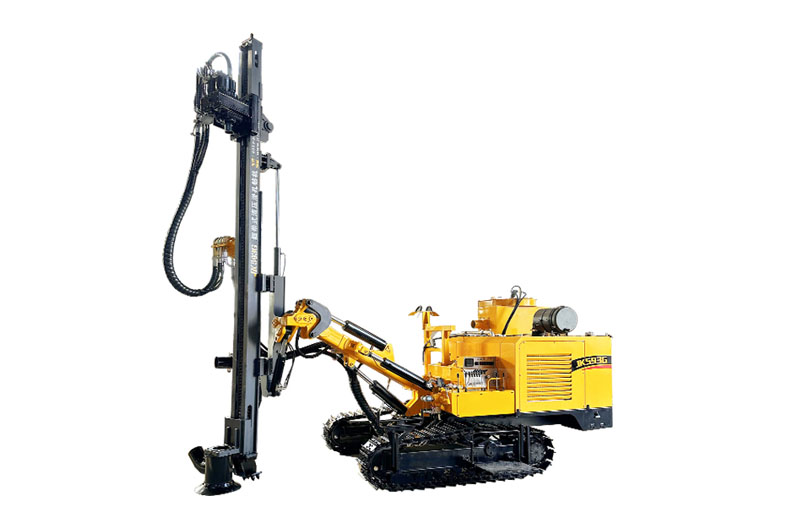
- JK593G Surface Drilling Rig for Drilling Blasthole & Photovol...
- JK830RC Reverse Circulation Drilling Rig
- JKS500F CRAWLER-MOUNTED REVERSE CIRCUL ...
- JK930 Integrated fully hydraulic open-pit Top Hammer Drill Rig


Copyright © Zhangjiakou Xuanhua Jinke Drilling Machinery Co., Ltd. All Rights Reserved | Sitemap


